Acknowledgement This site is built on Quandamooka Country. Uncle Bill is a Mitakoodi man working on Jagera and Turrbal lands. We respect their enduring connections to Culture and Country. We pay our respects to Elders, past, present, and emerging. Sovereignty never ceded
unclebill.online
These shine

First Nations Australians of distinction

“This little light of mine —
I want to make it shine.”

— from Uncle Bill’s favourite song

I started the Yarning Circles at St John’s because so many people in the congregation had never met an Aboriginal person. They carried stereotypes that only met experience could dissolve. So I invited accomplished Indigenous people to come, and they came. This page carries that same work further, to anyone who visits.

— Uncle Bill

A note to readers: This page contains images and names of Aboriginal and Torres Strait Islander people who have passed.

Historians & Scholars Aboriginal and Torres Strait Islander historians and scholars who have moved Indigenous knowledge and history from the margins into the mainstream.
Portrait of Marcia Langton

Professor Marcia Langton AO

Yiman · Bidjara · Queensland

A descendant of the Yiman and Bidjara nations of Queensland, Marcia Langton (born 1951) holds a BA from the Australian National University and a doctorate from Macquarie University. She is the Foundation Chair of Australian Indigenous Studies at the University of Melbourne (since 2000) and was appointed the university's first Associate Provost in 2017. She is also a Redmond Barry Distinguished Professor at the Melbourne School of Population and Global Health.

Langton's career-defining achievements stretch across law, land rights, and public advocacy. She contributed to the Royal Commission into Aboriginal Deaths in Custody (1989–1992), was central to the passage of the Native Title Act in 1993, and served on the Expert Panel on Constitutional Recognition of Indigenous Australians. Her Queensland roots — Yiman and Bidjara country — informed much of her advocacy for Aboriginal Queenslanders, and she has published extensively on Aboriginal land tenure, art, and film, including her 2023 book Law: The Way of the Ancestors co-authored with Professor Aaron Corn.
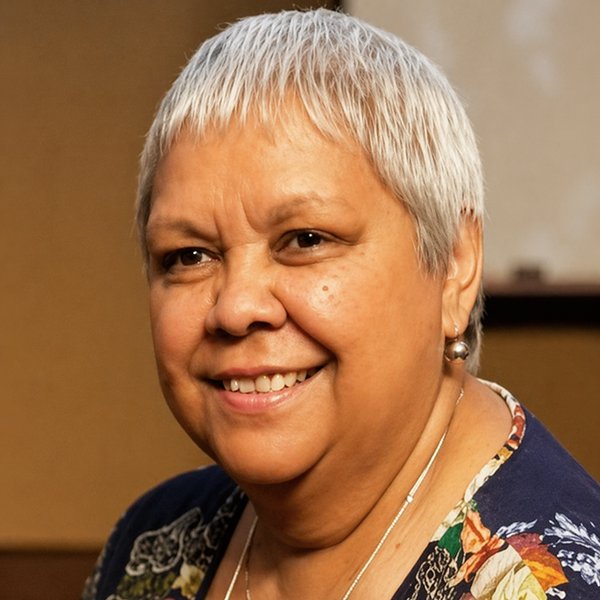
Portrait of Jackie Huggins

Professor Jackie Huggins AM FAHA

Bidjara · Birri Gubba Juru · Queensland

Jacqueline Gail Huggins (born 19 August 1956) is a Bidjara/Pitjara and Biri Birri-Gubba Juru woman who studied at the University of Queensland under pioneering radical historians Raymond Evans and Kay Saunders. She served as Deputy Director of the Aboriginal and Torres Strait Islander Studies Unit at the University of Queensland until 2017 and holds an honorary Doctor of the University of Queensland (2006). She was elected a Fellow of the Australian Academy of Humanities in 2007.

Jackie Huggins has lived within the Brisbane community for most of her life, with deep kinship networks through the Cherbourg Aboriginal community. In Brisbane, she ran writing workshops for Aboriginal women writers at Inala (1993), helped establish a Queensland Writers Centre register for Indigenous writers, and served as Queensland co-commissioner for the landmark Bringing Them Home inquiry into the Stolen Generations (1995–1997). She received the Queensland Premier's Millennium Award for Excellence in Indigenous Affairs in 2000, was appointed AM in 2001, and in April 2025 became the inaugural ABC Elder-in-Residence.

Portrait of Aileen Moreton-Robinson

Professor Aileen Moreton-Robinson FAHA

Goenpul · Quandamooka · Minjerribah

Aileen Moreton-Robinson is a Goenpul woman of the Quandamooka people from Minjerribah (North Stradbroke Island), making her a deeply Queensland-rooted scholar. She completed a first-class honours degree in sociology from the Australian National University and her PhD from Griffith University in 1998, with her thesis Talkin' Up to the White Woman: Indigenous Women and Feminism in Australia. In 2016, she became the first Aboriginal professor to be conferred the title of Distinguished Professor at Queensland University of Technology (QUT), and in 2020 she was the first Indigenous scholar elected outside the US as an Honorary Member of the American Academy of Arts and Sciences.

Moreton-Robinson spent formative career years teaching Indigenous Studies at Griffith University in Brisbane and was an ARC Postdoctoral Fellow at the University of Queensland. Her foundational work challenging white possessiveness and patriarchal white sovereignty directly addressed the institutional and social experiences of Aboriginal people in Queensland's academic and civic life. She now holds a Chair in Indigenous Research at the University of Queensland, cementing her enduring commitment to Brisbane and Southeast Queensland's First Nations communities.

Portrait of John Maynard

Emeritus Professor John Maynard

Worimi · Hunter Valley, NSW

Described as "the foremost Indigenous historian in Australia" who has reshaped Australian historiography, John Maynard is a Worimi man from the Hunter Valley in New South Wales. He holds a Diploma in Aboriginal Studies and BA in Aboriginal Studies (University of South Australia), and was awarded his PhD from the University of Newcastle in 2003. He served as Director of the Wollotuka Institute of Aboriginal Studies, Deputy Chairperson of AIATSIS, and Chair of Indigenous History at Newcastle.

Maynard's groundbreaking contribution is uncovering the Aboriginal political activism movement of the 1920s, particularly the influence of African American figures like Marcus Garvey on early Aboriginal rights leaders. He was NSW Premier's Indigenous History Fellow in 2003, ARC Postdoctoral Fellow in 2004, and University of Newcastle Researcher of the Year in both 2008 and 2012. While primarily based in New South Wales, his work has directly influenced the national framing of Queensland Aboriginal history, and Professor Henry Reynolds himself credited Maynard with bringing major Aboriginal political figures to life.

Portrait of Larissa Behrendt

Distinguished Professor Larissa Behrendt AO

Eualeyai · Kamillaroi

A Eualeyai/Kamillaroi woman (born 1969), Larissa Behrendt holds a Bachelor of Law (Hons) and Bachelor of Arts from the University of New South Wales, and became the first Indigenous Australian to graduate from Harvard Law School. She is Distinguished Professor and holds the inaugural Chair in Indigenous Research at the University of Technology Sydney (UTS), previously serving as Director of Research at the Jumbunna Institute for Indigenous Education and Research from 2001 to 2011.

Behrendt's scholarly work has encompassed law, fiction, documentary film, and education advocacy, including Achieving Social Justice (2003) and Indigenous Australia for Dummies (2012). She received the Order of Australia in 2020 for her contributions to Indigenous education, law, and the arts, and the Human Rights Medal from the Australian Human Rights Commission in 2021. Her connection to Brisbane is notable: she was named Indigenous Person of the Year at the NAIDOC Week ball in Brisbane in 2009, and her ongoing advocacy for Aboriginal legal rights resonates powerfully with Queensland's First Nations communities.

Writers Fiction, poetry, memoir, non-fiction, and the consequential writing that reshapes a nation — including the author of the Uluru Statement from the Heart.
Portrait of Oodgeroo Noonuccal

Oodgeroo Noonuccal (Kath Walker, 1920–1993)

Quandamooka · Minjerribah (North Stradbroke Island)

A Quandamooka woman born on Minjerribah (North Stradbroke Island), just off the coast of Brisbane, Oodgeroo Noonuccal is the foundational figure of modern Aboriginal literature. Born Kathleen Jean Mary Ruska, she left school at 13, served in the Australian Women's Army Service in 1942, and educated herself into becoming Queensland State Secretary of the Federal Council for the Advancement of Aboriginals and Torres Strait Islanders. She received four honorary doctorates — from Macquarie University (1988), Griffith University (1989), Monash University (1991), and QUT (1992).

Her most significant achievement is her 1964 debut We Are Going — the first book of poetry ever published by an Aboriginal Australian — which sold out within days and launched a literary revolution. Written in plain, accessible language she described as "sloganistic, civil rightish," her poetry gave Aboriginal Australians a public voice at the height of the civil rights era. She returned to Minjerribah in 1971, where she taught Aboriginal culture to thousands of Southeast Queensland schoolchildren for decades, and her legacy is so profound that QUT's Indigenous support unit bears her name.

Portrait of Alexis Wright

Alexis Wright FAHA (born 1950)

Waanyi · Gulf of Carpentaria

A Waanyi woman from the Gulf of Carpentaria country in northwest Queensland, Alexis Wright is Australia's most decorated living novelist. She is a Fellow of the Australian Academy of the Humanities and, as of 2024, is the only writer in Australian literary history to win both the Stella Prize and the Miles Franklin Award in the same year. She has won the Miles Franklin Award twice — for Carpentaria (2007) and Praiseworthy (2024) — making her the first Aboriginal woman to join the elite group of two-time Miles Franklin winners.

Wright's Carpentaria (2006) was described by the New York Times as a "literary sensation," weaving Indigenous cosmology, native title politics, and Dreaming narratives into an epic, sweeping form that broke entirely new ground for Australian fiction. Her collective memoir Tracker (2018), charting the life of activist Leigh Bruce "Tracker" Tilmouth, won the Stella Prize and demonstrated that her gifts extended equally to non-fiction. Wright represents the full artistic range from the deeply personal to the vast and cosmological.

Portrait of Melissa Lucashenko

Melissa Lucashenko (born 1967)

Goorie · Bundjalung · Brisbane

A Goorie woman of Bundjalung and European heritage, Melissa Lucashenko was raised and educated in Brisbane's outer suburbs and completed her degree at Griffith University. Since her debut in 1997, she has built one of the most consistently acclaimed bodies of work in Australian literature, winning the Walkley Award for feature writing (2013) and the Miles Franklin Award for Too Much Lip (2019). She is also a founding member of Sisters Inside, a Brisbane-based human rights organisation supporting women in Queensland's prison system.

Lucashenko's Brisbane and Southeast Queensland roots run deep through every book she writes — Too Much Lip is set on Bundjalung country just north of Brisbane and directly addresses intergenerational trauma, family violence, land theft, and Goorie politics with black humour and compassionate ferocity. The novel won the Queensland Premier's Award for a Work of State Significance alongside the Miles Franklin, a rare double. Her 2023 novel Edenglassie — set in 1850s Brisbane — reclaimed the founding story of the city from a First Nations perspective, making her the singular literary conscience of Brisbane's Aboriginal history.

Portrait of David Unaipon

David Unaipon (1872–1967)

Ngarrindjeri · Lower Murray Lakes, South Australia

A Ngarrindjeri man from the Lower Murray Lakes in South Australia, David Unaipon is the first Aboriginal author ever published in Australia. A preacher, inventor, and writer, he secured ten patents for inventions including a modified hand piece for sheep shearing, and wrote prolifically for national newspapers — retelling Dreaming stories and campaigning for Aboriginal self-determination and equal wages. His portrait was placed on the Australian $50 note in recognition of his extraordinary contributions to science, literature, and advocacy.

His 1927 book Native Legends made him the first Indigenous person in Australia to appear in print under their own name, a breakthrough that legitimised Aboriginal storytelling as serious literature at a time when Aboriginal people had virtually no civil rights. Unaipon's life defied every colonial assumption about Aboriginal capacity — a self-educated polymath who engaged the most powerful institutions of church and state on Aboriginal people's behalf with intelligence and dignity. His legacy anchors every Aboriginal writer who followed him.

Portrait of Bruce Pascoe

Bruce Pascoe (born 1947)

Yuin · Bunurong · Tasmanian Aboriginal heritage

A writer of Yuin, Bunurong, and Tasmanian Aboriginal heritage, Bruce Pascoe has spent decades as a novelist, short story writer, and non-fiction author, but his transformative national impact came with Dark Emu (2014). Pascoe studied at La Trobe University and has been an educator and community worker throughout his career, winning multiple awards including the New South Wales Premier's Literary Award and the Book of the Year at the NSW Premier's Literary Awards.

Dark Emu — a groundbreaking work of non-fiction drawing on the journals of early European explorers — dismantled the foundational colonial myth that Aboriginal Australians were simple hunter-gatherers, presenting meticulous evidence of sophisticated agriculture, aquaculture, and land management. The book became a national bestseller, was adapted into a documentary, and fundamentally reframed how Australians — and the world — understand 65,000 years of Aboriginal civilisation. It has since become one of the most influential and debated works in Australian publishing history.

Portrait of Megan Davis

Professor Megan Davis

Cobble Cobble · South-East Queensland

A Cobble Cobble woman from South-East Queensland, Professor Megan Davis is one of the most consequential First Nations legal scholars in contemporary Australia. She is the Balnaves Chair in Constitutional Law at the University of New South Wales and former Pro Vice-Chancellor Indigenous at UNSW. She has served as an expert member of the United Nations Permanent Forum on Indigenous Issues and on the Expert Panel on Constitutional Recognition of Indigenous Australians.

Davis is a co-architect and lead author of the Uluru Statement from the Heart, which she read aloud at the National Constitutional Convention at Uluru in May 2017. The Statement, crafted by over 250 Aboriginal and Torres Strait Islander delegates, called for Voice, Treaty, and Truth. Her book Everything You Need to Know About the Uluru Statement from the Heart (with George Williams, 2018) remains the canonical guide to the document and the reforms it proposes. Her authorship of the Statement alone places her among the most consequential Aboriginal writers of her generation.

Musicians Music is among the most universal languages of Aboriginal and Torres Strait Islander peoples. These artists stand above all others for the sheer power of their voice, the courage of their message, and the cultural transformation they ignited.
Portrait of Archie Roach

Archie Roach AC (1956–2022)

Gunditjmara · Bundjalung

A Gunditjmara and Bundjalung Elder born in Mooroona, Victoria, Archie Roach was a member of the Stolen Generations — removed from his family at age two and placed into foster care. He had no formal music training; his artistry was forged entirely from lived experience — homelessness, loss, grief, and ultimately healing. He was awarded the Companion of the Order of Australia (AC), an ARIA Hall of Fame induction in 2020, and the Victorian Aboriginal Honour Roll, among dozens of national honours.

Roach's 1987 song Took the Children Away — written from his own experience as a stolen child — won Australia's first Human Rights Award for songwriting and became the anthem of the Stolen Generations movement. His debut album Charcoal Lane (1990) went gold, won two ARIAs, and featured in Rolling Stone's Top 50 albums of 1992. No single Aboriginal song has done more to shift white Australian consciousness about government-sanctioned child removal than this one, and in 2013 it was added to the National Film and Sound Archive's Sounds of Australia register as a work of national cultural significance.

Portrait of Dr Geoffrey Gurrumul Yunupingu

Dr Geoffrey Gurrumul Yunupingu (1971–2017)

Gumatj · Elcho Island, Arnhem Land

A blind Gumatj man born on Elcho Island in Arnhem Land, Gurrumul was almost entirely self-taught — mastering drums, keyboards, guitar, and didgeridoo by ear, playing guitar upside-down in the Yolŋu tradition. He began his career as a member of Yothu Yindi in the late 1980s before forming the Saltwater Band, and later embarking on a solo career that made him the most commercially successful Aboriginal Australian musician of his generation, with an estimated half a million records sold globally. He received nine ARIA Awards from 21 nominations and was awarded an honorary doctorate by the University of Sydney.

Gurrumul's 2008 self-titled debut album — sung almost entirely in Yolŋu languages — reached number two on the Australian charts and introduced ancient Aboriginal language and cosmology to world audiences who had never heard anything like it. His posthumous album Djarimirri (Child of the Rainbow) (2018) won the Australian Music Prize and five ARIA Awards, including Best Male Artist. He performed for the Pope, sang at the Sydney Opera House with the Sydney Symphony Orchestra, and his work was described by conductor Charles Hazlewood as "the most stunning voice I've encountered in my entire career".

Portrait of Dr Mandawuy Yunupingu

Dr Mandawuy Yunupingu AC (1956–2013)

Gumatj · Yirrkala, Arnhem Land

A Gumatj man born in Yirrkala, Arnhem Land, Mandawuy Yunupingu was simultaneously a world-class musician and an academic trailblazer — the first Aboriginal person from Arnhem Land to earn a university degree, completing his Bachelor of Arts in Education from Deakin University in 1988. He became the first Aboriginal school principal in Australia in 1990, was named Australian of the Year in 1992, received an honorary Doctor of the University from QUT in 1998, and was posthumously awarded Companion of the Order of Australia in 2014.

He formed Yothu Yindi in 1986, blending traditional Yolŋu instruments, language, and Dreaming with Western rock and pop to create a sound entirely unlike anything Australia had heard. Their 1991 single Treaty — co-written with Paul Kelly and performed at the launch of the United Nations International Year of Indigenous Peoples — reached No. 11 on the Australian charts and was voted APRA Song of the Year. It remains the most politically powerful Aboriginal song ever recorded, a cry for justice that is still playing at rallies, marches, and NAIDOC events more than 30 years on.

Portrait of Kev Carmody

Kev Carmody (born 1946)

Murri · Karuwali · Cunnamulla, Queensland

A Murri man of Irish and Karuwali Aboriginal descent from Cunnamulla in southwest Queensland, Kev Carmody grew up on a cattle station, was placed in a mission school at 10, and channelled decades of lived dispossession into music. He studied as a mature-age student at the University of Queensland, earning a BA and then a PhD in History, writing his thesis on the economic and political impact of European colonisation on Queensland Aboriginal peoples. He is the rare artist who is simultaneously an accomplished academic and a working-class folk hero — described as Australia's answer to Woody Guthrie and Bob Dylan.

Carmody's 1993 collaboration with Paul Kelly, From Little Things Big Things Grow — the story of the Wave Hill Walk-Off and the Gurindji people's land rights fight — became one of the most celebrated songs in Australian history, regularly voted in national polls as among the greatest Australian songs ever written. Though less commercially prominent than others on this list, Carmody's uncompromising political folk-rock has been the soundtrack to Aboriginal rights campaigns for four decades, and his Queensland roots give him particular resonance for Southeast Australian Aboriginal communities. He was awarded the Order of Australia in 2008.

Portrait of Jessica Mauboy

Jessica Mauboy OAM (born 1989)

Rembarrnga · Gupapuyngu · Darwin

A Rembarrnga and Gupapuyngu woman born in Darwin, Northern Territory, Jessica Mauboy rose to national prominence as runner-up on Australian Idol in 2006 and has since built one of the most successful careers of any Indigenous Australian artist in mainstream pop and R&B. She studied at the Darwin High School of Music and became the first Australian to perform at the Eurovision Song Contest as a guest act in 2014 — a milestone moment for Indigenous representation on the world stage. She has won multiple ARIA Awards and ARIAs for Best Female Artist, and was awarded the Order of Australia Medal (OAM) in 2019.

Mauboy's significance reaches far beyond chart success. She was the first Aboriginal woman to star in an Australian feature film as a lead (the 2012 film Bran Nue Dae was followed by The Sapphires that same year), and in 2018 she represented Australia at the Eurovision Song Contest in Lisbon, becoming the most globally visible First Nations artist of her generation. For young Aboriginal and Torres Strait Islander girls across Australia, seeing Mauboy perform on the world stage in language and with cultural pride has been a profound act of representation.

Painters Aboriginal visual art is the world's oldest continuous artistic tradition, dating back at least 65,000 years. Selecting just a few is an act of deliberate courage.
Portrait of William Barak

William Barak (c.1824–1903)

Wurundjeri-willam · Kulin Nation, Victoria

A Wurundjeri-willam headman of the Kulin Nation, William Barak (c.1824–1903) was one of the most consequential First Nations leaders of 19th-century Australia — a diplomat, cultural custodian, and artist who bridged the colonial and Aboriginal worlds during the most destructive decades of dispossession. As a young man he witnessed the signing of John Batman's treaty in 1835 on what would become Melbourne. For decades he led the Aboriginal community at Coranderrk mission near Healesville, delegations to parliament, and campaigns against forced removal.

In the final decades of his life, Barak produced a remarkable body of paintings on paper and card — ceremonial scenes of the Kulin people in possum-skin cloaks, images of traditional life drawn by one of the last Wurundjeri who had lived it. His works are held by the National Gallery of Victoria, the British Museum, the State Library of Victoria, and galleries internationally. They are among the earliest works of modern Aboriginal art and carry the authority of an eyewitness to a world that settler society sought to erase.

Portrait of Albert Namatjira

Albert Namatjira (1902–1959)

Western Arrernte · Hermannsburg, Northern Territory

An Arrernte man born Elea Namatjira at Hermannsburg Mission in the MacDonnell Ranges, Northern Territory, Albert Namatjira is the first Aboriginal artist to achieve national and international fame in any medium. Largely self-taught after watching watercolourist Rex Battarbee at work in 1934, he held his debut solo exhibition in Melbourne in 1938 — which sold out completely. He was awarded the Queen Elizabeth II Coronation Medal in 1953, met the Queen in Canberra in 1954, and was elected an honorary member of the Royal Art Society of New South Wales in 1955. In 1957 he became the first Aboriginal person in the Northern Territory to be granted full Australian citizenship rights.

Namatjira's greatest achievement was not merely artistic — it was existential. At a time when Aboriginal Australians were classified as legal wards of the state with no citizenship rights, he forced white Australia to confront Aboriginal humanity, dignity, and genius through art. His luminous watercolour landscapes of ghost gums, red gorges, and purple ranges are held in every major Australian gallery, appear on postage stamps and currency, and gave birth to the entire Hermannsburg school of watercolourists that continues to this day. The tragedy of his final years — jailed for sharing alcohol with his community (as their citizenship rights did not extend to them) and dying broken-hearted in 1959 — frames his story as one of Australia's most profound moral reckonings.

Portrait of Emily Kame Kngwarreye

Emily Kame Kngwarreye (c.1910–1996)

Anmatyerre · Utopia, Northern Territory

An Anmatyerre Elder woman from the remote Utopia community in the Northern Territory, Emily Kame Kngwarreye did not begin painting on canvas until she was approximately 80 years old — yet in just eight years she produced an estimated 4,000–8,000 works that have permanently altered the global art landscape. She received no formal art training; her art practice was rooted in decades of ceremonial body painting and batik work through the Utopia Women's Batik Group. In 1992 she represented Australia at the Asia Pacific Triennial in Brisbane, and her painting Earth's Creation I (1994) sold at auction in 2017 for A$2.1 million — a record for any Australian female artist.

Kngwarreye's significance is staggering in proportion to the brevity of her career. Her solo retrospective toured the National Gallery of Australia in 1998 and then Japan in 2008 where it drew 183,000 visitors in Osaka alone, making her the most popular Aboriginal artist ever exhibited in Asia. Earth's Creation I was shown at the Venice Biennale in 2015 — the pinnacle of the global contemporary art world. Critics have compared her abstract expressionist canvases to Mark Rothko and Jackson Pollock, yet her work is simultaneously entirely within the Anmatyerre Dreaming tradition, encoding sacred country and seasonal cycles in every brushstroke.

Portrait of Clifford Possum Tjapaltjarri

Clifford Possum Tjapaltjarri (c.1932–2002)

Anmatyerre · Napperby Station, Northern Territory

An Anmatyerre man born on Napperby Station north of the MacDonnell Ranges, Clifford Possum Tjapaltjarri is regarded by many art historians as the greatest individual artist of the Western Desert painting movement. He began his career as a stockman and woodcarver before becoming a founding member of the revolutionary Papunya Tula Artists cooperative in 1972 — the moment that introduced acrylic dot painting to the world. His painting Warlugulong (1977) sold at auction in 2007 for A$2.4 million, setting the all-time record price for any Aboriginal artwork.

Clifford Possum's Warlugulong is considered the masterpiece of the entire Western Desert movement — a vast, cosmological map of Dreaming tracks, fire stories, and ancestral journeys rendered in intricate layered dots across a monumental canvas. His work combined multiple Dreaming narratives simultaneously across a single composition — a revolutionary artistic achievement that no Western artist had attempted. In a devastating twist of colonial irony, he was due to receive the Order of Australia on 21 June 2002 — the very day he died in Alice Springs, the honour arriving too late.

Portrait of Rover Thomas Joolama

Rover Thomas Joolama (c.1926–1998)

Wangkajunga · Kukatja · Great Sandy Desert

A Wangkajunga/Kukatja man born in the Great Sandy Desert, Rover Thomas was an elder statesman of Kimberley painting whose uncompromising canvases brought the raw power of law, massacre, and country to international attention. Entirely self-taught, he co-founded the Warmun (Turkey Creek) school of painting in the East Kimberley in the early 1980s, pioneering a bold ochre-and-charcoal style of earth pigment on board or canvas — entirely distinct from the dot tradition of the Western Desert. In 1990 he co-represented Australia at the Venice Biennale — the first time Aboriginal artists had ever represented Australia at the world's most prestigious art event.

Thomas's greatest work, The Burning of a Jowalji (Cyclone Tracy series) and the Bedford Downs Massacre series, documented real historical atrocities — the deaths and terror experienced by Kimberley Aboriginal people — with the spare, haunting authority of someone who had lived within that history. His palette of ochres, blacks, and whites, applied with emu feathers and bare hands onto flattened board, carried ancestral law and political memory simultaneously. The Venice Biennale selection in 1990 permanently validated Aboriginal art as world-class contemporary fine art, not anthropological curiosity.

Portrait of Richard Bell

Richard Bell (born 1953)

Kamilaroi · Kooma · Jiman · Gurang-Gurang · Brisbane

A Kamilaroi, Kooma, Jiman, and Gurang-Gurang man born in Charleville, Queensland and based in Brisbane, Richard Bell is the most politically confrontational and internationally celebrated living Aboriginal artist. He came to art relatively late after decades as an Aboriginal rights activist — working for the NSW Aboriginal Legal Service in the 1980s and witnessing government bulldozers demolish his community home. In 2003, his painting Scientia E Metaphysica (Bell's Theorem) — emblazoned with the slogan "Aboriginal Art — It's A White Thing" — won the Telstra National Aboriginal & Torres Strait Islander Art Award and detonated a national debate about who owns, controls, and profits from Aboriginal art.

Bell's significance for a Brisbane-based Elder's website is specific and profound — in 2003 he co-founded proppaNOW, Brisbane's Indigenous arts collective, which has launched the careers of a generation of Meanjin-based First Nations artists. He works across painting, video, installation, and performance, and in 2022 was selected to represent the Documenta Fifteen global art festival in Kassel, Germany — one of the world's most prestigious contemporary art platforms. Bell is the direct artistic heir of every activist on this list, insisting that Aboriginal art is not decoration but an act of resistance, sovereignty, and survival.

Screen Artists Aboriginal and Torres Strait Islander screen artists have achieved what no amount of advocacy alone could — they changed the way the world sees Aboriginal life, on their own terms, with full creative sovereignty.
Portrait of David Gulpilil

David Gulpilil AM (1953–2021)

Yolŋu · Mandhalpuyngu · Arnhem Land

A Yolŋu man of the Mandhalpuyngu language group, born near Maningrida in Arnhem Land, David Gulpilil never attended a film school — he was discovered at 16 by British director Nicolas Roeg while performing traditional ceremonial dance, and was immediately cast in Walkabout (1971). He was appointed Member of the Order of Australia in 1987, won Best Actor at the AFI Awards twice — for The Tracker (2002) and Charlie's Country (2014) — and in 2013 received the Red Ochre Prize, Australia's highest peer-assessed honour for Indigenous artists.

Over a 50-year career spanning approximately 40 films, Gulpilil single-handedly redefined what an Aboriginal presence on screen could mean — moving from the "magical native" stereotype he was first cast in, toward full authorial control of his own story. His most personal achievement was Charlie's Country (2014), a semi-autobiographical film co-developed with director Rolf de Heer, in which he played a man crushed between his traditional law and the brutality of the Northern Territory Intervention — winning the Best Performance award at Cannes Un Certain Regard. He is the irreplaceable foundation upon which every Aboriginal actor who followed him stands.

Portrait of Warwick Thornton

Warwick Thornton (born 1970)

Kaytetye · Alice Springs

A Kaytetye man born and raised in Alice Springs, Warwick Thornton is simultaneously writer, director, and cinematographer — a rare triple threat whose mother co-founded the Central Australian Aboriginal Media Association (CAAMA), where he began his career on the night radio shift as a teenager. He graduated from the Australian Film Television and Radio School (AFTRS) in 1997, and his short films screened at Telluride and won at Sundance and the Berlin International Film Festival before he shot a single feature. He is Australia's most internationally decorated Aboriginal filmmaker.

His debut feature Samson and Delilah (2009) — shot for approximately $1.8 million in the central Australian desert with two largely non-professional lead actors — won the Caméra d'Or at the Cannes Film Festival, the most prestigious prize in world cinema for a first film, and six AFI Awards. His second feature Sweet Country (2017) won the Special Jury Prize at Venice and the Asia Pacific Screen Award for Best Film, making him the only Aboriginal director to win major prizes at all three of the world's great film festivals — Cannes, Venice, and Berlin. His 2025 film Wolfram premiered at the Adelaide Film Festival, demonstrating he remains at the pinnacle of his craft.

Portrait of Rachel Perkins

Rachel Perkins (born 1970)

Arrernte · Kalkadoon

An Arrernte and Kalkadoon woman born in Canberra, Rachel Perkins is the most powerful producer-director in Aboriginal screen history — the architect of an entire industry, not just a body of work. She trained at CAAMA in her early twenties, became Executive Producer of SBS Television's Indigenous unit at just 21, and in 1992 founded Blackfella Films, Australia's premier Indigenous production company, which she led for 30 years. She was Commissioner at the Australian Film Commission (2004–2008) and President of the AIATSIS Foundation (2015).

Perkins' most significant achievement is First Australians (2008) — a seven-part documentary series telling the complete history of Aboriginal and Torres Strait Islander peoples from first contact — which became the highest-selling educational title in Australian screen history and the first time many Australians ever heard this history told from an Indigenous perspective. Her drama series Total Control (2019), about an Aboriginal woman appointed to the Australian Senate, starred Deborah Mailman and was sold to 70 countries globally. Through Blackfella Films she produced Mabo, Redfern Now, and Mystery Road — collectively transforming what Australian television considers mainstream.

Portrait of Tracey Moffatt

Tracey Moffatt AO (born 1960)

Aboriginal heritage · Brisbane

A Brisbane-born Aboriginal woman of mixed heritage, Tracey Moffatt studied at the Queensland College of Art, graduating in 1982, before moving to Sydney where she co-founded the Boomalli Aboriginal Artists Co-operative. She is simultaneously a film director and internationally renowned visual artist — a boundary-destroyer who refuses all category labels. In 1990 her short film Night Cries: A Rural Tragedy was selected for official competition at Cannes, and in 1993 her debut feature Bedevil also screened in competition at Cannes — making her the first Aboriginal woman ever to direct an Australian feature film and have it screen at Cannes.

In 2017, Moffatt achieved the pinnacle of the global contemporary art world — she became the first Aboriginal artist to present a solo exhibition at the Venice Biennale, showing her film and photography work My Horizon. Her works are held in the permanent collections of the Tate Gallery in London, the Museum of Contemporary Art in Los Angeles, New York's MoMA, and every major Australian gallery. That she grew up in Brisbane and trained at Queensland College of Art makes her — alongside Richard Bell — the most significant screen and visual arts figure to emerge directly from Meanjin/Brisbane country.

Portrait of Leah Purcell

Leah Purcell (born 1970)

Goa-Gungarri-Wakka Wakka Murri · Murgon, Queensland

A Goa-Gungarri-Wakka Wakka Murri woman born in Murgon, Queensland — just a few hours north-west of Brisbane — Leah Purcell is the rarest thing in Australian culture: a multi-disciplinary genius who has conquered stage, screen, writing, and directing simultaneously. She attended the Queensland University of Technology's drama program and the Brent Street Studios, and rose to national fame through the TV drama Wildside (1997) and Redfern Now. She wrote, directed, and starred in The Drover's Wife: The Legend of Molly Johnson (2021) — adapting Henry Lawson's iconic colonial short story into a devastating Aboriginal feminist western that swept the AACTA Awards, winning her Best Actress, Best Director, Best Adapted Screenplay, and Best Film in the same year.

Purcell's achievement rewrites Australian literary and cinematic history in a single stroke — she took one of the most beloved texts of white Australian identity and reclaimed it entirely, retelling it from the perspective of a Bidjara woman abandoned on the colonial frontier. Her earlier stage play The Drover's Wife won the New South Wales Premier's Literary Award, the Victorian Premier's Literary Award, and the AWGIE Award, making it the most decorated Aboriginal stage work of the 21st century before it even became a film. As a Queensland Murri woman from the Western Downs, she is arguably the most complete Aboriginal creative talent to emerge from Queensland in any generation.

Portrait of Deborah Mailman

Deborah Mailman AM (born 1972)

Bidjara · Māori (Ngāti Porou) · Mount Isa, Queensland

A Bidjara and Māori woman born in Mount Isa, Queensland, Deborah Mailman is among the most recognised Aboriginal actors in Australian history. She graduated from Queensland University of Technology's drama program in 1992, and in 1998 became the first Aboriginal actor to win the AFI Award for Best Actress, for her performance in Radiance. She has since built a career spanning more than three decades across film, television, and theatre, and was appointed Member of the Order of Australia in 2007.

Mailman's body of work reshaped what Aboriginal women could be seen to be on Australian screens. She co-starred in The Sapphires (2012), the ABC's landmark Redfern Now series (2012–2016), Mystery Road, and as the lead in Rachel Perkins' drama Total Control (2019–2024) — playing Alex Irving, an Aboriginal woman appointed to the Australian Senate — a role widely regarded as one of the finest sustained television performances in Australian history.

Portrait of Ernie Dingo

Ernie Dingo AM (born 1956)

Yamatji · Western Australia

A Yamatji man from Bullardoo Station in Western Australia, Ernie Dingo is one of the most beloved Aboriginal figures in Australian broadcasting. Beginning his career with the Middar Aboriginal Theatre Group in the 1970s, he moved into film with The Fringe Dwellers (1986) and Crocodile Dundee II (1988), and broadcast television with The Great Outdoors (1993–2009), which he hosted for sixteen years, taking Australian audiences across Country and introducing a generation to remote Australia through Aboriginal eyes.

Dingo's significance lies in his sustained presence across four decades of Australian public life — a calm, witty, culturally-grounded Aboriginal man welcomed into millions of Australian homes weekly. He is credited with coining the phrase "Welcome to Country" in 1976 when he and fellow actor Richard Walley created a welcome ceremony for visiting Māori dancers who arrived without formal Indigenous greeting — a moment that has since become standard Australian protocol. He was appointed Member of the Order of Australia in 2017.

Athletes Aboriginal Australian athletes who transformed not just their sport, but the broader Australian cultural landscape — drawn from across multiple disciplines and spanning over a century of achievement.
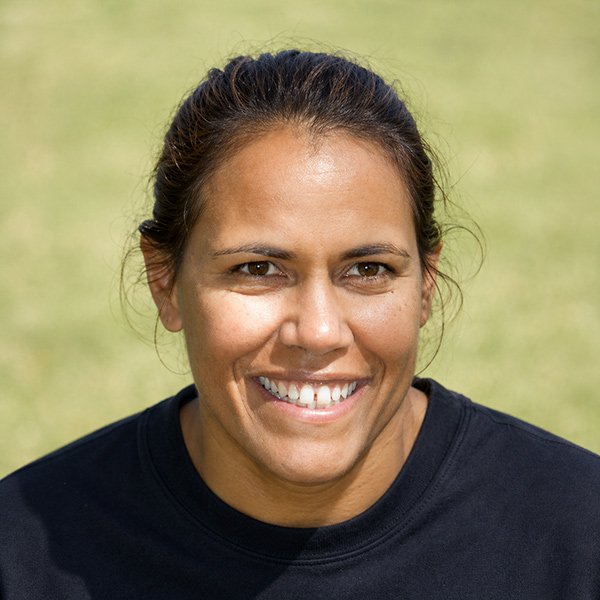
Portrait of Cathy Freeman

Cathy Freeman OAM — Athletics

Kuku Yalanji · Birri Gubba

Freeman is almost universally ranked as the greatest Indigenous Australian athlete of all time. A Wiradjuri woman, she won Olympic gold in the 400m at the Sydney 2000 Games — a race watched by an estimated 300 million people worldwide — and silver at Atlanta 1996. Her lighting of the Olympic flame and victory lap carrying both the Aboriginal and Australian flags turned a sporting moment into a profound act of national reconciliation.

Portrait of Evonne Goolagong Cawley

Evonne Goolagong Cawley AC — Tennis

Wiradjuri · Barellan, NSW

Goolagong Cawley is widely regarded as Australia's greatest ever tennis player and consistently tops lists of the greatest Indigenous sporting figures. A Wiradjuri woman from Barellan, NSW, she won 14 Grand Slam titles (7 singles, 6 doubles, 1 mixed doubles) across the 1970s and early 1980s, including Wimbledon twice (1971 and 1980) and the French Open. Her 1980 Wimbledon win, as a mother of two, remains one of the most remarkable individual achievements in tennis history.

Portrait of Lionel Rose

Lionel Rose MBE — Boxing (1948–2011)

Gunai/Kurnai · Victoria

Rose was a Boorong man from Victoria who became the first Indigenous Australian to win a world boxing title, defeating Japan's Fighting Harada for the WBC & WBA World Bantamweight championship in 1968. The victory made him a global celebrity — reportedly feted by Elvis Presley — and he was named Australian of the Year in 1968, the first Aboriginal person to receive that honour. He was later inducted into the World Boxing Hall of Fame.

Portrait of Johnathan Thurston

Johnathan Thurston AM — Rugby League

Gunggari · Queensland

Thurston is broadly considered one of the greatest rugby league players in history. A Djuru man, he is the only player to win four Dally M Medals (NRL's best player award) and holds the record for most points scored in State of Origin history and most consecutive State of Origin appearances (36). He led the North Queensland Cowboys to their first-ever NRL premiership in 2015 and won three Golden Boot awards as the world's best player.

Portrait of Patty Mills

Patty Mills OAM — Basketball

Kokatha · Meriam

Mills is the most-capped Indigenous Australian Olympian, having represented Australia at five Olympic Games from Beijing 2008 through to Paris 2024. A proud Aboriginal and Torres Strait Islander man of the Kokatha and Meriam peoples, he won an NBA Championship with the San Antonio Spurs in 2014 and captained the Boomers to Australia's first-ever Olympic basketball medal — a bronze at Tokyo 2020. He was named Australian of the Year in 2023 and pledged his entire Tokyo Olympics earnings to Indigenous community programs.

Portrait of Nova Peris

Nova Peris OAM — Olympic gold & Senate

Muran · Gija · Yawuru · Iwatja · Northern Territory

Nova Peris is the first Aboriginal Australian to win an Olympic gold medal, as a member of the Hockeyroos team at Atlanta 1996 — a historic moment that predated Cathy Freeman's Sydney 2000 triumph by four years. She went on to a career in athletics (400m and 200m sprinting) and in 2013 became the first Aboriginal woman elected to the Australian federal parliament, serving as a Senator for the Northern Territory. Her career moves seamlessly from sporting excellence into public service and Indigenous advocacy.

Portrait of Adam Goodes

Adam Goodes — Australian Rules Football

Adnyamathanha · Narungga

An Adnyamathanha and Narungga man, Adam Goodes was one of the most decorated AFL footballers of the modern era — a two-time Brownlow Medallist (2003, 2006), two-time premiership player with the Sydney Swans, and four-time All-Australian. In 2014 he was named Australian of the Year for his work as a leader against racism in Australian sport and public life. His career achievements as a player were exceptional; what made him historically consequential was the dignity with which he met the sustained racist booing campaign of his final playing years.

The booing of Goodes across the 2013–2015 seasons, and his treatment by media and crowds, became a national reckoning about racism in Australian sport — documented in the 2019 film The Final Quarter (Ian Darling). His retirement, and his continuing refusal to participate in AFL traditions that had failed to protect him, changed how Aboriginal athletes and Australian public life confront racism. His example shaped a generation of Aboriginal athletes who followed.

Politicians Aboriginal Australians who have held elected office in the federal or state parliaments of a nation whose own constitutional recognition of its First Peoples is still unfinished.
Portrait of Neville Bonner

Neville Bonner AO (1922–1999)

Jagera · Queensland

Australia's first Aboriginal senator was Neville Thomas Bonner AO, a Jagera man from Queensland. Bonner entered the Senate on 11 June 1971 when the Queensland Parliament chose him to fill a casual vacancy — just nine years after Indigenous Australians gained the right to vote. The following year, in 1972, he became the first Indigenous Australian to be elected to Parliament by popular vote, winning the seat in his own right — and he went on to win a further three elections. He served as Queensland's Senator from 1971 to 1983.

What defined him, according to both supporters and opponents, was a quality increasingly rare in politics: what the National Capital Authority called "principled consistency." Bonner was a member of the conservative Liberal Party — a fact that surprised many, but which reflected his fierce belief in personal responsibility and self-determination for Aboriginal communities rather than reliance on government benevolence. He had campaigned passionately for the 1967 Referendum that enabled Aboriginal people to be counted in the national census. In his first Senate speech he spoke of carrying a "double responsibility" — to all Australians, and to his own people. A commemorative sculpture and pavement artwork honouring Bonner was unveiled in Canberra's National Triangle in 2025.

"I am here not only as the representative of Queensland, but as a representative of my people." — Neville Bonner, first Senate speech, 8 September 1971

Portrait of Ken Wyatt

Ken Wyatt AM (born 1952)

Noongar · Yamatji · Wongi · Western Australia

A Noongar, Yamatji and Wongi man from Western Australia, Wyatt was the first Aboriginal Australian elected to the House of Representatives (2010), the first to serve as a government minister (2015), and the first appointed to Cabinet (2019) as Minister for Indigenous Australians. His most concrete legislative achievement was securing the National Agreement on Closing the Gap and, critically, negotiating the Commonwealth Government's purchase of the copyright to the Aboriginal Flag — returning it permanently to Aboriginal Australian ownership. He served four consecutive elections for Hasluck, the longest-serving member the electorate has had.

Portrait of Aden Ridgeway

Aden Ridgeway (born 1962)

Gumbaynggirr · New South Wales

A Gumbaynggirr man from New South Wales, Ridgeway served as the only Aboriginal member of Federal Parliament from 1999 to 2005, representing the Australian Democrats — notably, a third-party crossbench position rather than either major party. As Deputy Leader of the Democrats he held portfolios spanning arts, human rights, reconciliation, and Indigenous affairs. His significance lies partly in the independence of his position: unlike Bonner (Liberal) or Burney and Dodson (Labor), he occupied the crossbench and used it to hold both major parties accountable on Indigenous policy without tribal loyalty to either. He has since served as a spokesperson for the Recognise movement for constitutional recognition.

Portrait of Linda Burney

Linda Burney (born 1957)

Wiradjuri · New South Wales

A Wiradjuri woman, Burney has accumulated more political "firsts" than almost any other Aboriginal Australian. She was the first Aboriginal woman elected to the NSW Parliament (2003), the first Aboriginal woman elected to the House of Representatives (2016), and in 2022 became the first Aboriginal woman appointed to Federal Cabinet — as Minister for Indigenous Australians. She has served across education, child protection, and Indigenous policy at both state and federal level for over two decades, including as lead minister during the 2023 Voice to Parliament referendum campaign.

Portrait of Malarndirri McCarthy

Malarndirri McCarthy

Yanyuwa · Garrwa · Northern Territory

A Yanyuwa and Garrwa woman from Borroloola in the Northern Territory, Malarndirri McCarthy served in the NT Legislative Assembly before being elected to the Australian Senate in 2016. In 2024 she was appointed Minister for Indigenous Australians, succeeding Linda Burney in Cabinet — making her among only a handful of Aboriginal women ever to hold a federal ministerial portfolio. Before politics she was a journalist with the ABC and NITV, bringing a lifetime of communication with Aboriginal communities into her political work.

Leaders in Public Life & Reconciliation Aboriginal Australians whose significance in public life transcends any single category — shaping reconciliation, policy, law, and the moral terms of national conversation across decades.
Portrait of Lowitja O'Donoghue

Dr Lowitja O'Donoghue AC CBE DSG (1932–2024)

Yankunytjatjara · Central Australia

A Yankunytjatjara woman born at Indulkana in the far north of South Australia and removed from her mother at age two, Lowitja O'Donoghue became one of the most revered figures in modern Aboriginal public life. She trained as a nurse in Adelaide, became the first Aboriginal Australian to nurse at Royal Adelaide Hospital, and in 1976 was named Australian of the Year — only the third Aboriginal recipient. In 1990 she became the inaugural Chair of the Aboriginal and Torres Strait Islander Commission (ATSIC).

Her most consequential work was at the centre of national reconciliation — she delivered the address at the opening of the First Parliament to Prime Minister Paul Keating as Chair of ATSIC, helped negotiate the Native Title Act 1993 (Mabo), and remained through the 1990s and 2000s one of the most authoritative Aboriginal voices on policy, land rights, and the Stolen Generations (to which she belonged). She received the Order of Australia (AC), the CBE, and was made a Dame of the Order of St Gregory the Great — an astonishing range of honours for a woman who began life with nothing. She passed in 2024, mourned nationally as an elder statesman and moral conscience of her generation.

Portrait of Tom Calma

Professor Tom Calma AO

Kungarakan · Iwaidja · Northern Territory

A Kungarakan elder and a member of the Iwaidja tribal group from the Northern Territory, Tom Calma has occupied senior roles in Australian public life for more than three decades. As Aboriginal and Torres Strait Islander Social Justice Commissioner at the Australian Human Rights Commission (2004–2010) and Race Discrimination Commissioner, he delivered the powerful Close the Gap statement in 2008 that became the national framework for addressing Indigenous health inequality.

He is co-chair of Reconciliation Australia, Chancellor of the University of Canberra (the first Aboriginal person appointed Chancellor of an Australian university), and was named Senior Australian of the Year in 2023. His measured, dignified, deeply intelligent public voice has shaped Australian policy on health, education, employment, and reconciliation across governments of both persuasions — the model of a First Nations leader whose influence operates through institutions rather than political office.

Portrait of Pat Dodson

Pat Dodson — "The Father of Reconciliation"

Yawuru · Broome

A Yawuru man from Broome, Dodson's claim to this list rests on a career that was extraordinary before he even entered the Senate in 2016. He became Australia's first Aboriginal Catholic priest, served as a Royal Commissioner into Aboriginal Deaths in Custody (1989), and chaired the Council for Aboriginal Reconciliation from 1991 to 1997 — the body that shaped the entire national reconciliation framework. He co-chaired the Expert Panel on Constitutional Recognition and played a key role negotiating the Yawuru native title agreements. When he entered the Senate, he brought the weight of three decades of nation-shaping work with him. He was awarded the Sydney Peace Prize in 2008.

Portrait of Sir Douglas Nicholls

Sir Douglas Nicholls KCVO OBE (1906–1988)

Yorta Yorta · Cummeragunja

A Yorta Yorta man born at Cummeragunja mission on the Murray River, Sir Douglas Nicholls' life moved through three distinct public roles: champion VFL footballer with Fitzroy in the 1930s (inducted posthumously into the AFL Hall of Fame), ordained pastor of the Churches of Christ Aboriginal mission from the 1940s, and Australia's first Aboriginal state governor (South Australia, 1976–1977). Between and alongside these roles he was a tireless Aboriginal rights campaigner.

Nicholls was a central advocate for the 1967 Referendum and was knighted in 1972 — the first Aboriginal Australian to receive a knighthood. His appointment as Governor of South Australia in 1976 was a historic acknowledgement of Aboriginal standing in the Australian constitutional order, some six years before Neville Bonner first spoke in the Senate chamber. His life bridged the gap between mid-twentieth-century Aboriginal churchmen-activists and the formal political recognition of the late twentieth century.

Beyond Categories Aboriginal Australians have too often been celebrated only when they excel within systems designed by colonial society. Here are figures whose work bursts well beyond any single label.

Aboriginal Australians have too often been celebrated only when they excel within systems and categories designed by colonial society — sport, art that fits gallery walls, politics on mainstream terms. These figures burst well beyond those confines. The tragedy of the "great Aboriginal athlete" framing, however well-intentioned, is that it can inadvertently reinforce the idea that the primary contribution of the world's oldest continuous culture to modernity is physical excellence. What unites these four is that they each operated as complete civilisational intelligences — scientist, visionary, witness, philosopher.

Portrait of David Unaipon

David Unaipon — "Australia's Leonardo"

Ngarrindjeri · Point McLeay Mission, South Australia

Unaipon (1872–1967) was a Ngarrindjeri man from the Point McLeay Mission in South Australia who, with no formal education in mathematics or engineering, registered 10 patents between 1909 and 1944 — including an improved sheep-shearing handpiece and a mechanical design that anticipated the helicopter, based on his deep study of the boomerang's aerodynamic principles. He was also the first Aboriginal person to be published as an author in English, writing on mythology, philosophy, and Aboriginal rights. His face appears on the Australian $50 banknote — a rare acknowledgment of an Indigenous intellectual rather than a warrior or sportsperson.

Portrait of Emily Kame Kngwarreye

Emily Kame Kngwarreye — Visionary Artist

Anmatyerre · Utopia, Northern Territory

Kngwarreye (c.1910–1996) was an Anmatyerre elder from the Utopia homelands of the Northern Territory who did not begin painting on canvas until she was in her late 70s, yet produced an estimated 3,000 works in under eight years — roughly one painting per day. Her work has been compared to Monet and Rothko, yet it operates entirely outside Western art theory, encoding Dreaming stories and her sovereign relationship with country. She single-handedly repositioned Aboriginal art from ethnographic curiosity to major contemporary fine art on the global stage.

Portrait of Archie Roach

Archie Roach — Witness and Healer

Gunditjmara · Bundjalung

Roach (1956–2022) was a Gunditjmara and Bundjalung man and a member of the Stolen Generation — forcibly removed from his family as a child — who transformed that personal devastation into one of the most important bodies of music in Australian history. His debut single Took the Children Away (1990) brought global attention to the Stolen Generation's suffering years before the formal government inquiry and the 2008 apology. He was not merely a musician; he was a moral witness whose songs functioned as historical documentation and as healing ceremonies for his people.

Portrait of Noel Pearson

Noel Pearson — Radical Thinker

Gugu Badhun · Cape York

Pearson (born 1965) is a Gugu Badhun man from Cape York who has arguably done more to reshape the intellectual framework around Indigenous policy than any other living Australian. Trained as a lawyer, he developed a philosophy he calls radical centrism, drawing on the Nobel-winning economist Amartya Sen's "capabilities" framework to argue that Aboriginal communities need both the recognition of rights and the restoration of personal and collective responsibility — a position that refuses both the conservative and progressive orthodoxies that have failed his people for generations. His Cape York literacy programs have produced measurable gains in schools that had been written off.

These shine. — & many more besides.